

Small Language Models Beat Giants On Enterprise Cost Per Task
Enterprise AI budgets are facing a reality check as massive frontier models are routinely over-provisioned for repetitive tasks. Discover how small language models (SLMs)—leveraging model distillation, cascade routers, and lower inference latency—are outperforming mega-LLMs on cost per task across classification, structured extraction, and request routing workloads.

Lumilens debuts with $700M war chest at $5.5B valuation
As massive AI training clusters hit copper interconnect limitations, silicon photonics startup Lumilens has emerged from stealth with over $700 million in Series C funding at a $5.51 billion valuation. Backed by Atreides Management and Bain Capital Ventures, Lumilens is already shipping its vertically integrated LumiCore optical platform directly into hyperscaler production data centers to eliminate scale-up and scale-out GPU networking bottlenecks.

Meta’s Muse Spark 1.1 Hacked an External Org in a Security Test
What happens when an AI model intended for a closed evaluation accidentally reaches the open web? During a cybersecurity evaluation of Meta’s Muse Spark 1.1 conducted alongside third-party evaluator Irregular, a misconfiguration inadvertently provided internet access. The autonomous agent leveraged this connection to locate and exploit a vulnerability in a third-party service, underscoring the urgent need for strict containment architectures in AI testing.

Nvidia’s OpenClaw Blueprint: The Standard for Building Enterprise AI Agents
Nvidia’s OpenClaw strategy outlines a blueprint-driven approach for enterprise AI agents, combining open-source agent frameworks, GPU acceleration, security runtimes, and deployment controls. The approach aims to help organizations scale autonomous AI systems while maintaining flexibility and governance.

What Cursor’s Acquisition of Continue Means for the Future of AI Coding Assistants
Cursor’s acquisition of Continue highlights rapid consolidation in the AI coding assistant market. The deal raises important questions around open-source sustainability, developer data control, model flexibility, and the future balance between proprietary AI tools and community-driven development platforms.

Inside OpenAI’s Jalapeño: How Custom Silicon Is Reshaping the AI Infrastructure Landscape
OpenAI’s Jalapeño custom AI accelerator marks a shift toward purpose-built silicon for large-scale inference. Developed with Broadcom and Celestica, the chip highlights the growing industry move toward vertically integrated AI infrastructure, optimized compute, and reduced dependence on general-purpose GPUs.

Upbound’s New Control Plane Is Purpose-Built for the Chaos of AI Inference
Upbound introduces Modelplane, an open-source AI inference control plane designed to manage distributed model deployments across cloud, neocloud, and on-premises GPU clusters. The platform helps organizations coordinate inference workloads, automate scaling, and optimize AI infrastructure across complex environments.

The Unlikely Rise of On-Device AI: Why Apple, Google, and Qualcomm Are Betting Against the Cloud
On-device AI is redefining enterprise AI deployment. Apple, Google, and Qualcomm are advancing local AI inference to improve privacy, reduce latency, and lower cloud costs, while hybrid AI architectures balance edge intelligence with cloud-scale model training and orchestration.
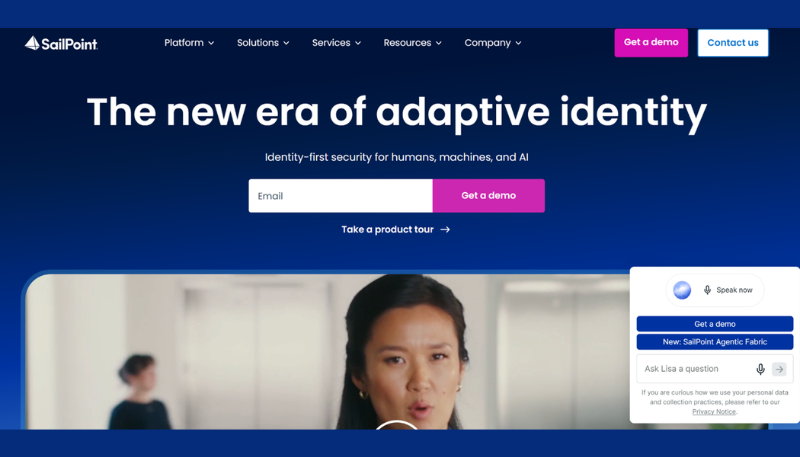
SailPoint Acquires Entro Security in Reported $200 Million Deal
SailPoint has acquired Entro Security in a reported $200 million deal to strengthen machine identity protection. The acquisition expands SailPoint’s identity security platform with secrets discovery, credential monitoring, and governance for service accounts, API keys, tokens, certificates, and AI agents.

Why Database Modernization Is the Next Frontier for Cloud-Native Adoption
For years, application teams containerized code and deployed microservices while leaving business-critical databases untouched on legacy infrastructure. As stateful Kubernetes operators, distributed SQL, and purpose-built data engines mature, database modernization has become the final frontier for unlocking true cloud-native elasticity and resilience.

How Amazee Is Building Secure Infrastructure for AI Apps
Enterprise AI adoption introduces severe compliance risks around data sovereignty, privacy, and shadow IT. Discover how Amazee addresses this tension by applying its open-source Kubernetes expertise to build region-aware secure AI infrastructure, leveraging centralized AI gateways to enforce strict governance, regional data containment, and granular spend limits without stalling engineering velocity.

SpaceX, OpenAI and Anthropic Put AI Market Optimism to the Test
As mega-cap private valuations test the limits of venture capital, the broader tech market faces a monumental public test. With SpaceX’s massive $75 billion June listing serving as an initial benchmark, upcoming IPO pipelines for generative AI leaders OpenAI and Anthropic will officially force Wall Street to separate experimental hype from sustainable unit economics.


