
Shift-Down Security: How Native Replaces Detection with Prevention at the Infrastructure Level
Gal Ordo, co-founder and CPO at Native Security, argues that the era of detection-based cloud security is over. In a world where AI models like

Why GPU Resource Management Is Becoming a Cloud Operations Challenge
Simply acquiring more accelerators won’t solve your AI infrastructure bottlenecks. Explore why rising AI workloads have transformed GPU resource management into a complex cloud operations challenge, requiring platform teams to move past basic capacity planning and dive deep into utilization-aware scheduling, resource sharing, and end-to-end data pipeline visibility.

Why Developers Are Increasingly Refusing to Work Without AI
Software development paradigms are undergoing a permanent generational shift. As tools like GitHub Copilot and ChatGPT transition from novel coding extensions to foundational engineering requirements, developers are altering their workflows—increasingly rejecting environments that lack integrated AI assistance.

Hexo Labs Releases SIA, an Open Source Self-Improving AI System
AI agents have historically remained static after deployment, relying on engineers for updates. Hexo Labs changes this paradigm with SIA (Self-Improving AI), an open-source framework capable of autonomously modifying both its structural prompt scaffold and its underlying neural network weights to systematically enhance its own performance.

Claude Opus 4.8 Raises the Stakes for AI Token Management
High reasoning depth comes with an implicit infrastructure cost. In 2026, Anthropic’s launch of Claude Opus 4.8 highlights a growing concern for enterprise tech budgets: token cost accumulation. This technical breakdown analyzes the architectural economics of Claude Code’s multi-agent workflows, the newly explicit Effort Level Controls, and how the industry is fighting “tokenmaxxing” behavior by deploying vendor-agnostic routing abstractions.
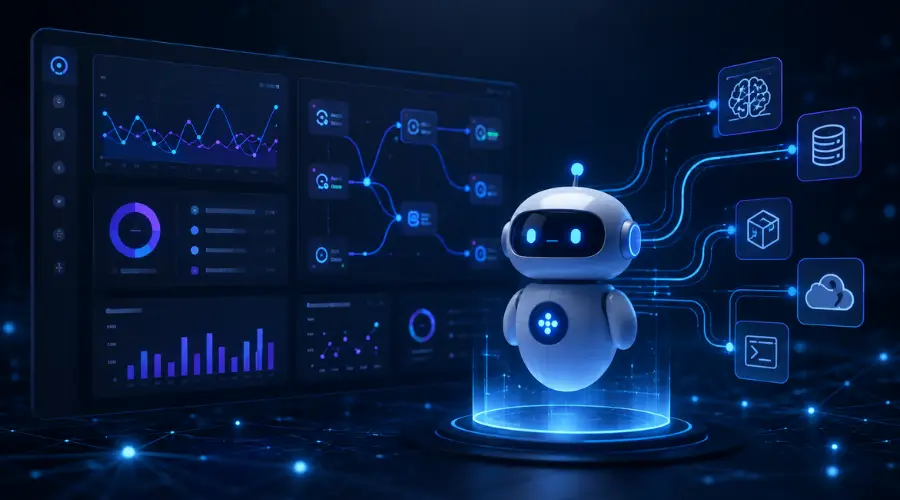
Dash0 Bets on AI Observability as Agent0 Reaches General Availability
The “Dark Software Factory” is officially online. In June 2026, Dash0 announced the General Availability of Agent0, shifting its core focus from pure OpenTelemetry compilation to native Observability for the AI Era. This technical feature breaks down how Agent0 uses an OpenCore multi-agent architecture to autonomously ingest OpenTelemetry GenAI semantic conventions, analyze contextual runtime anomalies, and automatically deploy draft GitOps pull requests before human engineers are paged.

Cisco’s Astrix Deal Shows AI Agents Have an Identity Problem
The attack surface has evolved: it’s no longer just users; it’s autonomous machines acting on behalf of users. Cisco’s May 2026 acquisition of Astrix Security signals a major industry push into the non-human identity (NHI) space. This article explores why traditional MFA and human IAM systems fail to secure the emerging agentic workforce, how over-privileged API tokens act as invisible backdoors, and how integrating NHI telemetry into platforms like Duo and Splunk allows security teams to monitor machine-to-machine interactions at machine speed.

Torq Raises $140M: Why AI-Powered SOC Is the Future of Security
Alert fatigue is out; agentic hyperautomation is in. Torq’s recent $140M funding round officially signals the arrival of the AI-native SOC. This article explores why legacy SIEM and SOAR tools fall short against modern enterprise data volumes, how autonomous AI agents execute end-to-end incident triage, and how low-code, natural-language platforms allow tier-1 analysts to automate complex workflows without writing a single line of code.

Does AI Really Need Kubernetes? New Data Sparks Debate
Everyone said AI would break the internet. Turns out, it might just be running on Kubernetes. The most recent research published by the Cloud Native

How Abnormal AI Uses Behavioral AI to Detect Hidden Email Threats
Email is still where many attacks begin, but the way those attacks show up has changed. Security teams used to spend more time blocking malware,

Why Rubrik Uses AI Gateways and Policies to Secure Agentic AI
AI agents change the security scenario because they do more than answer questions. Unlike chatbots, AI agents take action. They can search records, call tools,

Global tech leaders converge in Berlin to set new AI directions for Europe’s €1.5 trillion tech economy
Europe is rallying the global tech ecosystem to transform the continent’s AI momentum into tangible business impact, as global tech leaders, policymakers and enterprises converge


