
Mapping Kubernetes Security Controls to SOC 2 and ISO 27001

In 2024, a report by IBM Security found that the global average cost of a data breach reached $4.45 million, the highest on record. Now here’s the part most teams quietly ignore. A growing share of these incidents is tied to misconfigurations, excessive permissions, and gaps in visibility inside cloud and container environments.
Picture this. A team ships fast, pushes updates daily, scales across clusters, and feels confident because “security is handled.” Then an audit shows up, or worse, an incident. Suddenly, nobody can clearly explain who had access to what, which workloads were exposed, or whether controls were actually enforced. That gap between assumption and proof is where Kubernetes and compliance collide.
Kubernetes is powerful, but it does not automatically make you compliant. It gives you the tools. What matters is how you map those tools to frameworks like SOC 2 and ISO 27001 in a way that holds up under scrutiny.
In this article, we are going to walk through how core Kubernetes controls align with SOC 2 and ISO 27001 requirements, how to make those controls enforceable instead of theoretical, and how to turn everyday cluster activity into continuous audit evidence.
Why mapping Kubernetes to compliance frameworks is not optional anymore
There was a time when compliance lived in documents. Policies were written, reviewed once in a while, and pulled out during audits. That world does not exist anymore.
In Kubernetes environments, things change too quickly for static controls to keep up. A new deployment can introduce risk in minutes. A misconfigured role can open access instantly. A missing policy can go unnoticed until it becomes a problem. SOC 2 and ISO 27001 were never designed specifically for Kubernetes, but their intent fits perfectly. They expect control over access, visibility into activity, protection of data, and discipline around changes.
Kubernetes already has mechanisms for all of this. The challenge is not capability; it is alignment. When mapping is done right, compliance stops being a separate effort. It becomes a natural outcome of how your cluster operates. When it is done poorly, teams end up duplicating work, chasing evidence, and constantly reacting instead of staying in control.
RBAC: Turning access control into something you can defend
Access control is where every serious audit begins. Kubernetes handles this through Role-Based Access Control, which lets you define permissions at a very granular level. This aligns directly with SOC 2 expectations around logical access and ISO 27001 requirements for managing user permissions.
The real issue is not whether RBAC exists, but how disciplined teams are in using it. It is very common to see overly broad permissions because they make things easier in the short term. That convenience builds silent risk over time. A tighter setup focuses on least privilege. Every identity gets only what it needs to function, nothing more. That alone reduces a huge portion of potential exposure. But control without visibility is incomplete. Every permission change needs to be logged and traceable. When someone asks who had access and why, you should not be guessing.
Encryption: The layer that fails quietly
Encryption rarely gets attention when things are working, which is exactly why it becomes dangerous when it is not. Both SOC 2 and ISO 27001 expect strong protection for data in transit and at rest. Kubernetes supports this through TLS for service communication and encryption for sensitive data stored in systems like etcd.
The weak point is often internal traffic. Many teams assume that communication inside the cluster is safe. That assumption breaks quickly in shared or compromised environments. Once an attacker gets in, unencrypted traffic becomes an easy path forward. Encryption limits how far the attacker can go and how much they can see.
Audit logging: From activity to accountability
Audit logs are not just records. They are your system’s memory. Kubernetes captures detailed logs of API activity, showing who did what and when. This directly supports monitoring and logging requirements in both SOC 2 and ISO 27001.
The difference between useful logging and useless logging comes down to what happens after logs are generated. Logs need to be centralized so they cannot be tampered with. They need to be retained long enough to support investigations. Most importantly, they need to be monitored. If suspicious activity happens and nobody notices, the system may be logging everything and still failing at its job.
Workload isolation: Keeping incidents contained
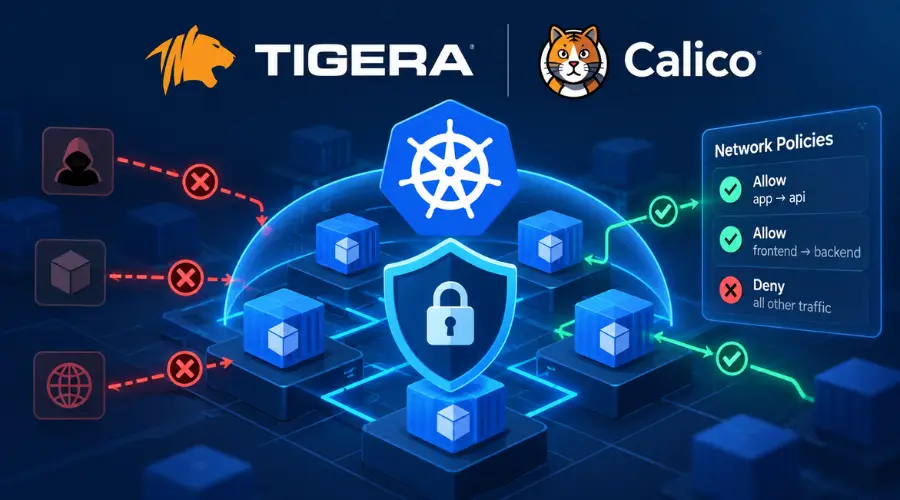
One of Kubernetes’ strongest features is its ability to isolate workloads, but it does not enforce strong isolation unless you configure it deliberately. Namespaces, network policies, and security standards help separate applications and control how they communicate. This aligns with confidentiality and network security expectations in both SOC 2 and ISO 27001.
The reason this matters becomes obvious during incidents. When isolation is weak, a single compromised workload can affect everything around it. Strong isolation changes the outcome. It limits movement, reduces impact, and gives teams a chance to respond before things escalate.
Policy as Code: Where compliance stops being a document
This is where teams start moving from theory to enforcement. Policy-as-code tools allow you to define rules that Kubernetes enforces automatically. Instead of relying on people to remember guidelines, the system ensures they are followed. A workload that violates a policy does not get deployed. A configuration that breaks security rules gets rejected immediately.
This approach does two important things. It prevents problems before they reach production, and it creates clear evidence that controls are consistently enforced.
CI/CD validation: Fixing problems before they reach the cluster
Compliance checks that happen after deployment are already too late. By shifting validation into the CI/CD pipeline, teams can catch issues before anything goes live. Configurations are scanned, policies are evaluated, and non-compliant changes are stopped early.
This aligns directly with change management expectations in both frameworks. It also makes life easier for developers, because fixing issues early is always simpler than fixing them under pressure later. Over time, this creates a workflow where compliance is built into delivery rather than layered on top of it.
Automated evidence collection: Making audits boring
The hardest part of compliance has never been controls. It has always been proven that those controls exist and are working. Traditionally, that proof is collected manually, which is slow and unreliable. Kubernetes changes that.
Audit logs capture activity continuously. Policy engines record enforcement decisions. Pipelines document validation steps. Monitoring systems track behavior in real time. When these pieces are connected, evidence is generated automatically as part of normal operations. That shift turns audits from stressful events into routine processes.
Kubernetes does not introduce new compliance problems. It exposes existing weaknesses faster and on a larger scale. If your controls live in documents, they will drift away from reality. If they live inside the system, enforced and observed continuously, compliance becomes part of how you operate every day. That is the difference between preparing for audits and always being ready for them.










Get involved!
Comments